Granite, imported
to a specification
and a tolerance.
Stone is the one landscape material that cannot be fixed after installation. Colour consistency across a batch, dimensional tolerance, finish, and slip resistance in the wet all have to be right at the quarry, because there is no maintenance regime that recovers them later.
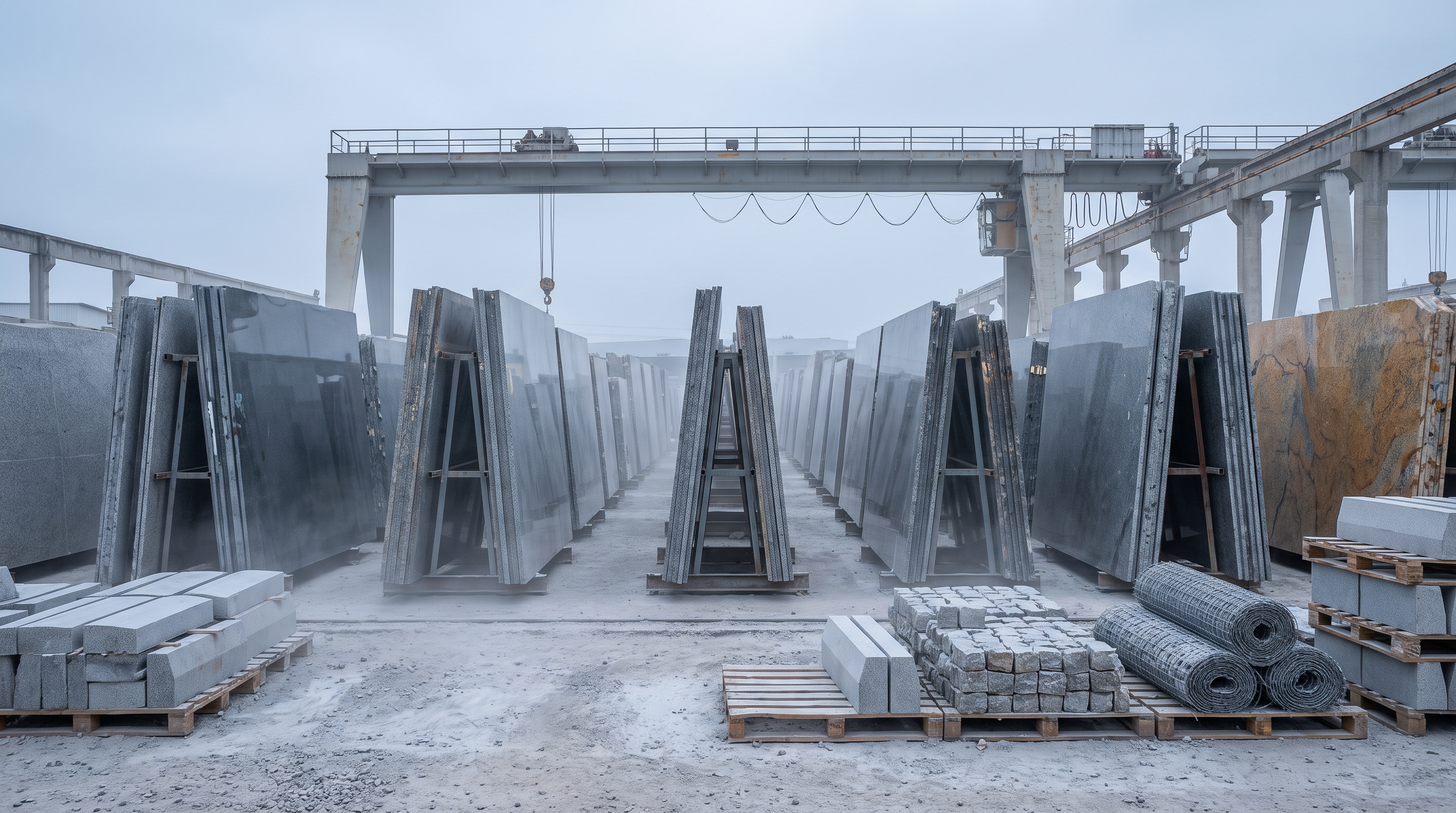
Approved atthe quarry.
A stone yard in Fujian at first light. Colour consistency is decided here, not on site.
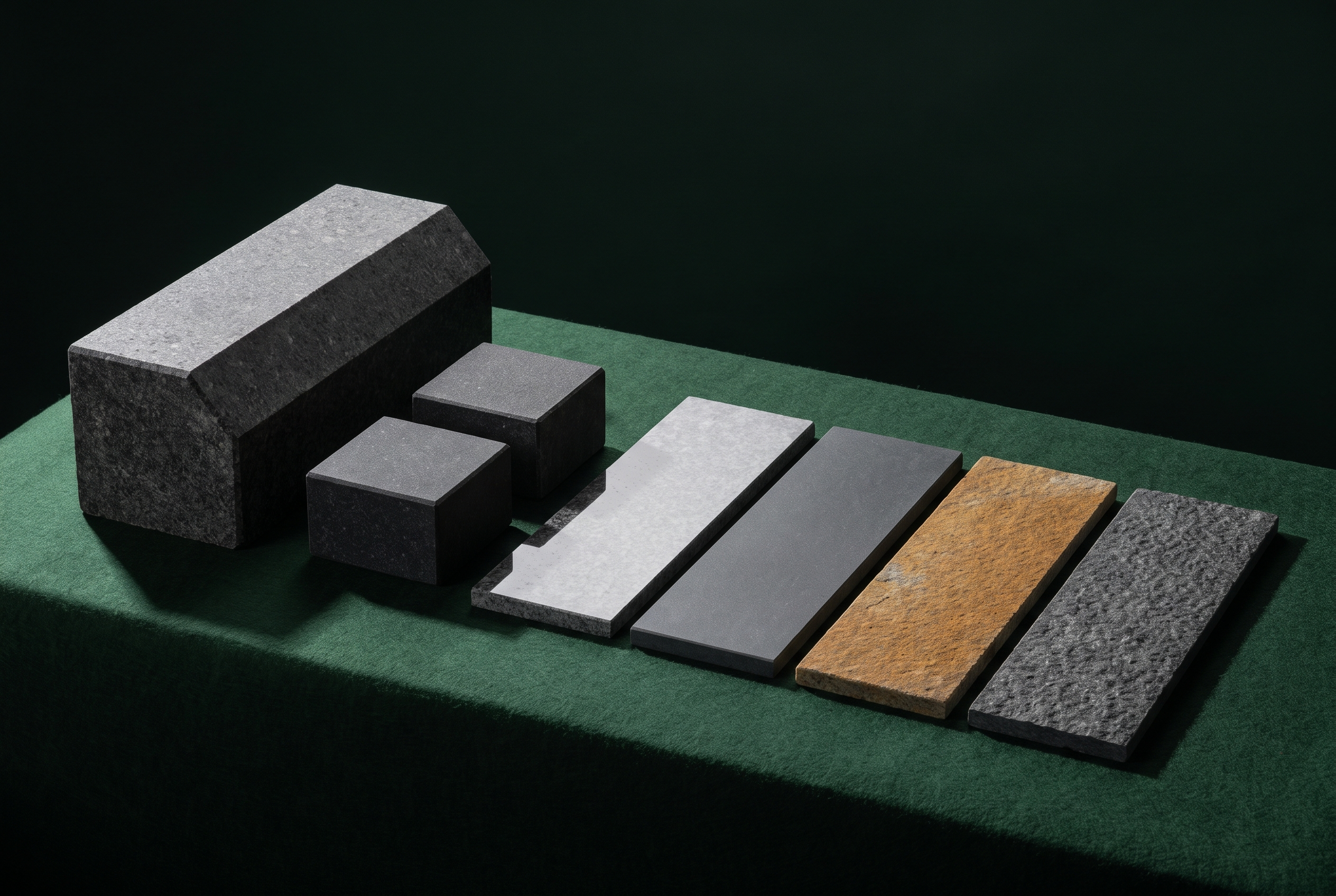

What we import
| Product | Finishes | Typical thickness | Application |
|---|---|---|---|
| Paving slab | Flamed, honed, bush-hammered, sawn | 20 / 30 / 40 / 50 mm | Plazas, walkways, podium decks |
| Kerb and edging | Sawn and flamed | To section | Roads, medians, planter edges |
| Cobble and setts | Split, flamed, tumbled | 50 to 100 mm | Feature paving, traffic calming, drainage channels |
| Cladding | Honed, polished, flamed | 20 to 30 mm | Retaining walls, planters, water features |
| Boulder and feature stone | Natural, split | By piece weight | Rockeries, arid landscape, erosion control |

Approve the batch, not the sample.
A single approved sample tells you what one piece of stone looked like on one day. It tells you nothing about the variation across the block or across the quarry run.
For anything where colour consistency matters, approve a control area assembled from the actual production batch, retain a reference set, and write the acceptable variation into the order. On a large plaza that single step is worth more than every other clause in the specification.
- Specify
- Finish, thickness, tolerance, edge detail, arris
- Confirm
- Slip resistance in the wet, for the finish actually supplied
- Control
- Batch reference set retained at both ends
- Plan for
- Lead time from order to port, plus clearance and haulage
Send the stone schedule and the finish.
Product, finish, thickness, quantity, tolerance and required date. We will come back with options, lead times and the batch control we would recommend.