Coco peat, sold on
a specification
rather than a photo.
Low, mid and high EC grades, washed and buffered where the crop needs it, in compressed blocks, bricks, slabs and loose bulk. Every consignment carries the numbers that decide whether your crop establishes.
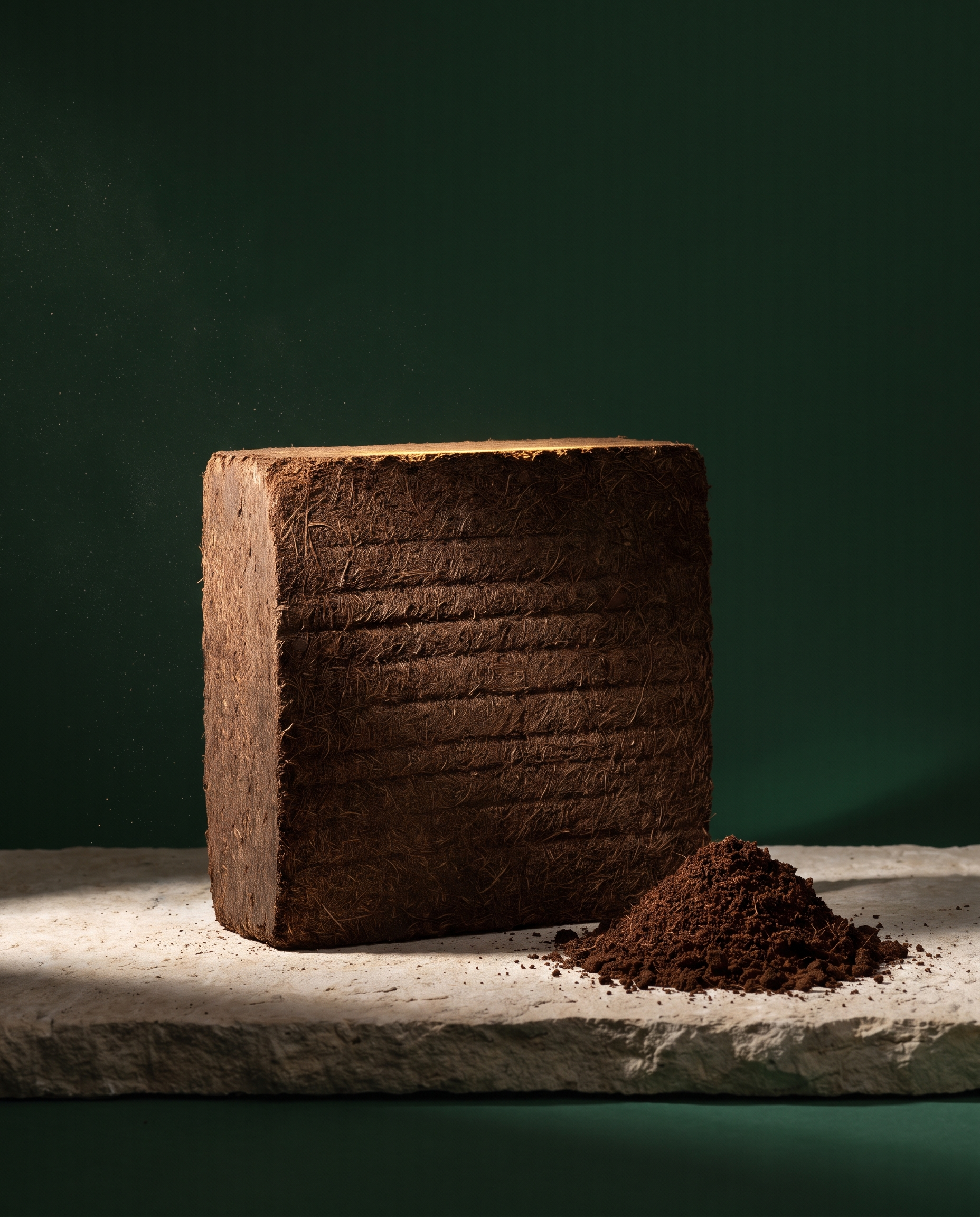
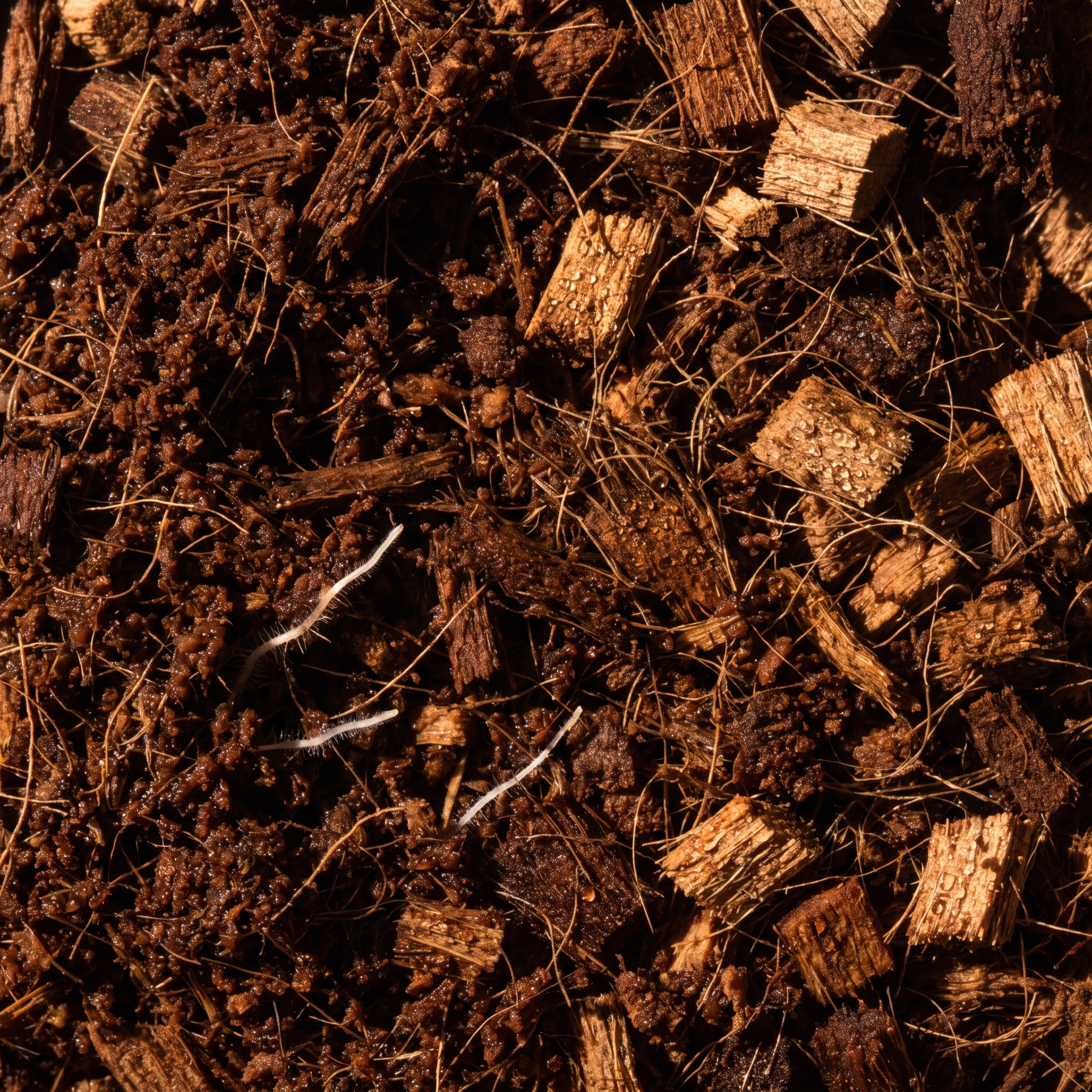

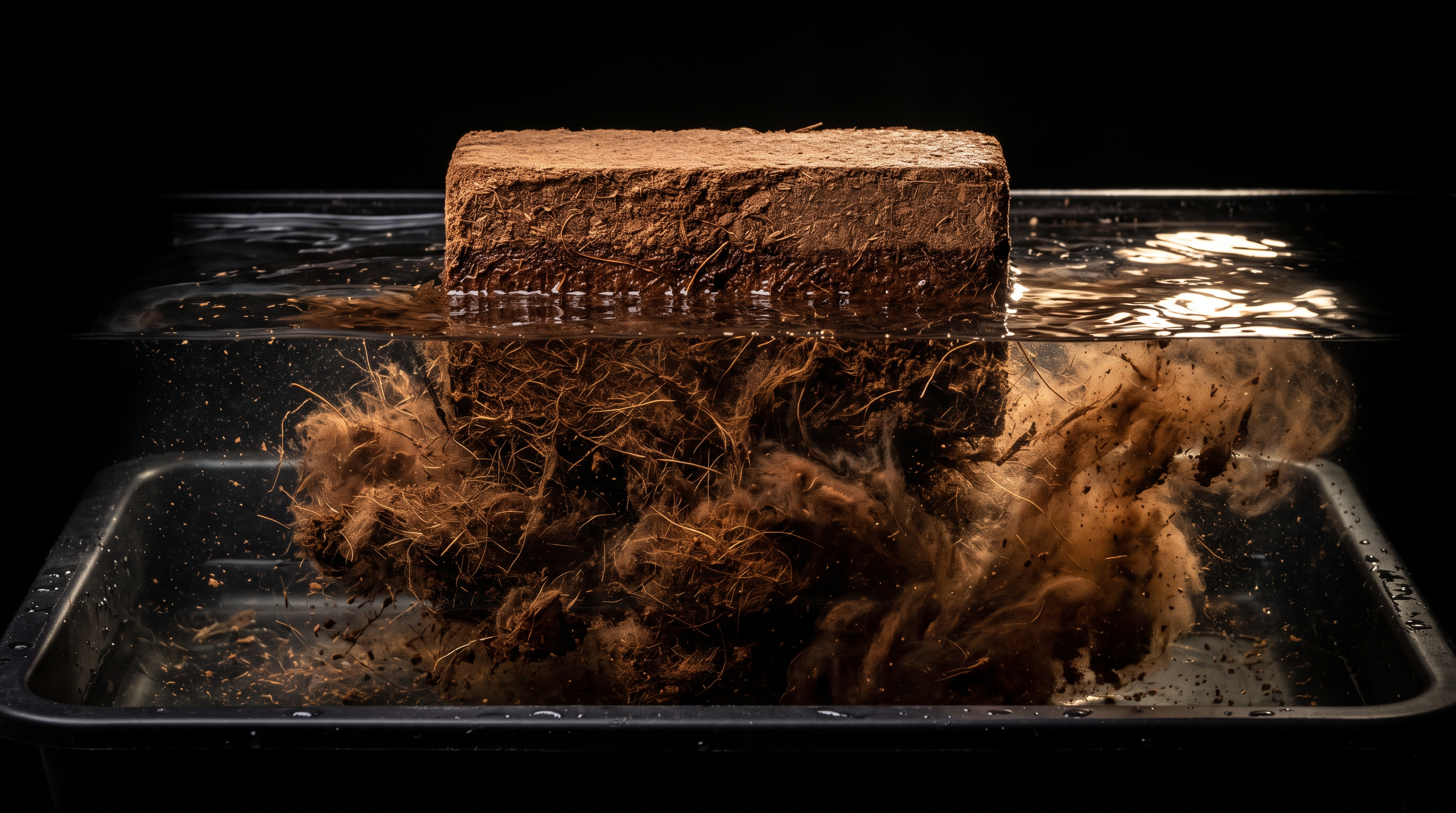

Match the grade to the job
Low EC
Below ~0.5 mS/cm
Propagation, seedlings, salt-sensitive crops, closed and recirculating hydroponics
Typical treatment: Washed and buffered
Mid EC
~0.5 to 1.0 mS/cm
General nursery production, container growing, landscape soil amendment
Typical treatment: Washed
High EC
Above ~1.0 mS/cm
Open-field soil conditioning, mulching, erosion control where leaching is free
Typical treatment: Unwashed or partially washed
The number that causes most disputes. A 1:1.5 volume extract and a 1:5 water extract give very different EC readings for the same material. Comparing them directly makes a compliant batch look like a failing one, or worse, the reverse. Always confirm the extraction method before you compare two quotations. Why, in full
How it ships
| Format | Yield | Typical use |
|---|---|---|
| 5 kg compressed block | 65 to 75 L hydrated | Nursery, retail, terrace and roof media blending |
| 650 g brick | 8 to 9 L hydrated | Retail, sampling, small-batch propagation |
| Grow bag / slab | Made to volume | Protected cropping, tomato, cucumber, berry |
| Loose fill, baled | By cubic metre | Bulk landscape amendment and large media blends |
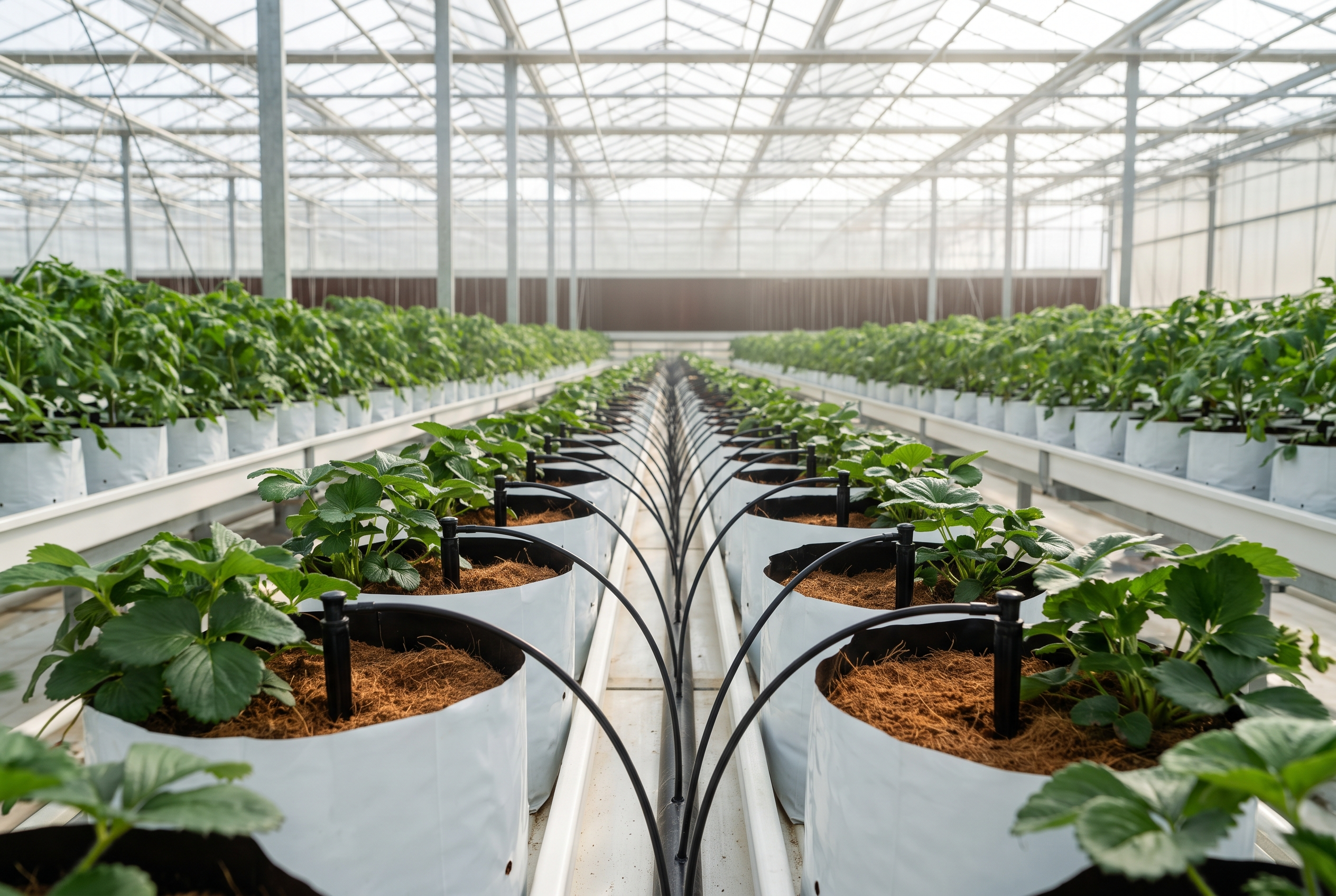
Wrong grade,lost season.
Coir grow bags under protected cropping: the application that punishes a wrong EC grade fastest.
What arrives with the consignment
- Electrical conductivity
- With the extraction method named
- pH
- With the extraction method named
- Particle size distribution
- Including the dust fraction
- Moisture content
- At loading — it changes the price per dry tonne
- Compression ratio
- And the expected hydrated yield
- Treatment
- Washed, or washed and calcium-buffered
Before you buy a container from anyone, work through what to ask a coco peat supplier. It is written to be used against us as much as against anyone else.
Answered directly
What EC grade of coco peat do I need?
Match the grade to the crop and the system. Low EC — below roughly 0.5 mS/cm at a 1:1.5 extract — is for propagation, seedlings, salt-sensitive crops and any closed or recirculating hydroponic system where salts accumulate. Mid EC, roughly 0.5 to 1.0, suits general nursery production, container growing and landscape soil amendment. High EC, above roughly 1.0, is economical for open-field soil conditioning, mulching and erosion control where leaching is free and the salt load is diluted by the soil volume. Using high EC material in a propagation tray is one of the most common and most expensive mistakes in the region.
Why does washed and buffered coco peat cost more, and is it worth it?
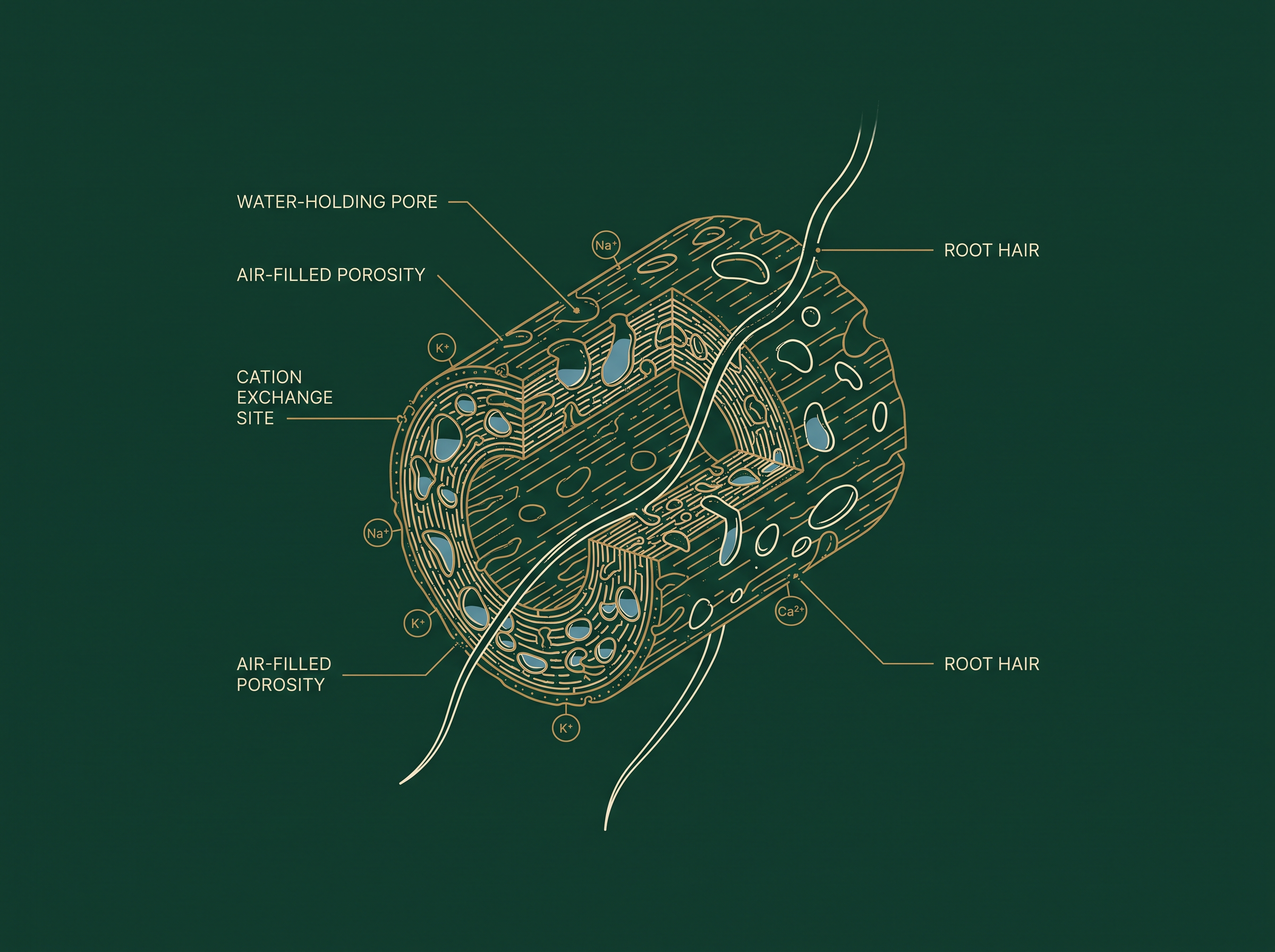
Raw coir carries sodium and potassium from the husk and from any seawater retting, and it holds a high cation exchange capacity that will strip calcium and magnesium out of your feed solution for the first several weeks. Washing removes the free salts. Buffering with a calcium nitrate solution pre-loads the exchange sites so the medium stops stealing calcium from the crop. For propagation, hydroponics and any high-value crop the premium is small against the cost of a failed batch. For bulk soil conditioning on open ground it is usually not necessary.
How much does a 5 kg compressed block expand to?
A 5 kg block of standard compressed coco peat yields approximately 65 to 75 litres of hydrated medium, depending on compression ratio and grade. Blocks expand fastest in warm water and should be allowed to hydrate fully and then drained before use — planting into partially hydrated coir causes it to swell in place and lift plants out of the container.
Do you supply with laboratory analysis?
Yes. Batch documentation covers electrical conductivity and pH by the stated extraction method, particle size distribution, moisture content and compression ratio. Always confirm which extraction method a supplier is quoting: a 1:1.5 volume extract and a 1:5 water extract produce very different numbers for the same material, and comparing them directly makes a compliant batch look like a failing one, or worse, the reverse.
Tell us the crop, and we will tell you the grade.
Crop or application, system type, volume required and delivery point. That is enough to specify the grade, the treatment and the format properly instead of guessing.