Forest is a density
problem, not a
planting problem.
Our founding team tested the Miyawaki method as a trial block on an operating international airport campus in India. Canopy closed fast, weeding demand collapsed once the canopy shaded the ground, and the block stopped needing us. That result is why afforestation is a core capability rather than a line item.
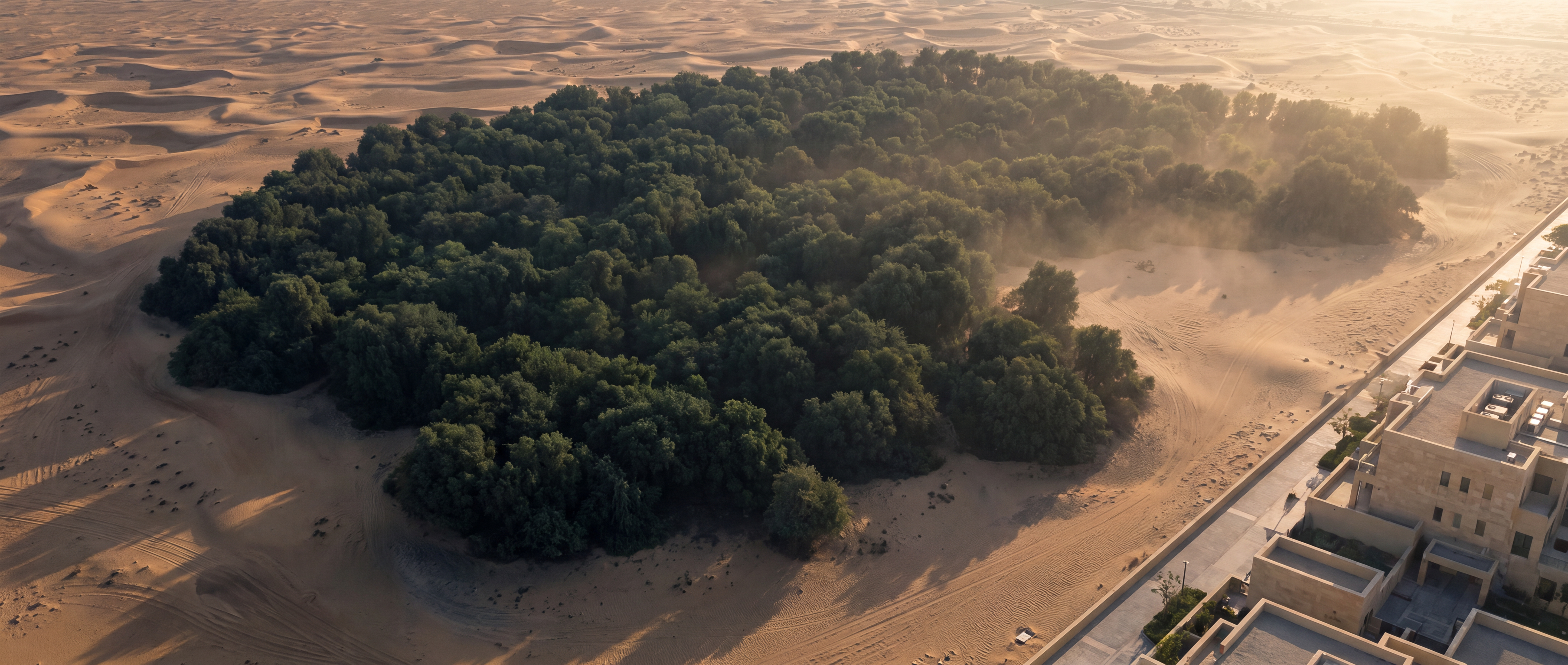
Plant dense.Then walk away.
Canopy at first light. Density is what gets you here in three years instead of twelve.

Prepare deeply, plant densely, then leave.
Deep soil preparation and organic amendment. Native species from every forest layer planted in a randomised mix at high density. Heavy mulch. Intensive watering and weeding for two to three years. Then intervention stops.
Competition for light drives vertical growth. Canopy closure suppresses weeds. The block becomes self-sustaining years before a conventional avenue planting would, and it does it on ground that is often too small, too degraded or too awkward for conventional landscape to bother with.
Density is the whole method
Conventional avenue planting puts one tree every few metres and waits. Miyawaki planting puts two to four plants per square metre in a randomised multi-layer mix and lets competition for light do the work. Drag the control and watch what changes.
- Canopy closure
- 37%
- Years to closure
- 4 to 6
- Establishment water
- 4.1 L/m²/day
Indicative for arid-adapted native mixes on a prepared site. Water demand shown is for the establishment period only, which is exactly the number a proposal should be forced to state and to give an end date for.
Two things have to change for the Gulf.
The method travels. The species list and the water plan do not.
First, the species must be genuinely regionally adapted. A tropical monsoon list transplanted into the Emirates will consume water forever and still thin out. The palette below is where an arid mix starts.
Second, the water plan must be real. A dense block has a high establishment demand for two to three years. That needs a secured non-potable source, ideally treated sewage effluent, and a stated date at which supplementary irrigation is switched off. Any proposal that skips either point is selling a photograph, not a forest.


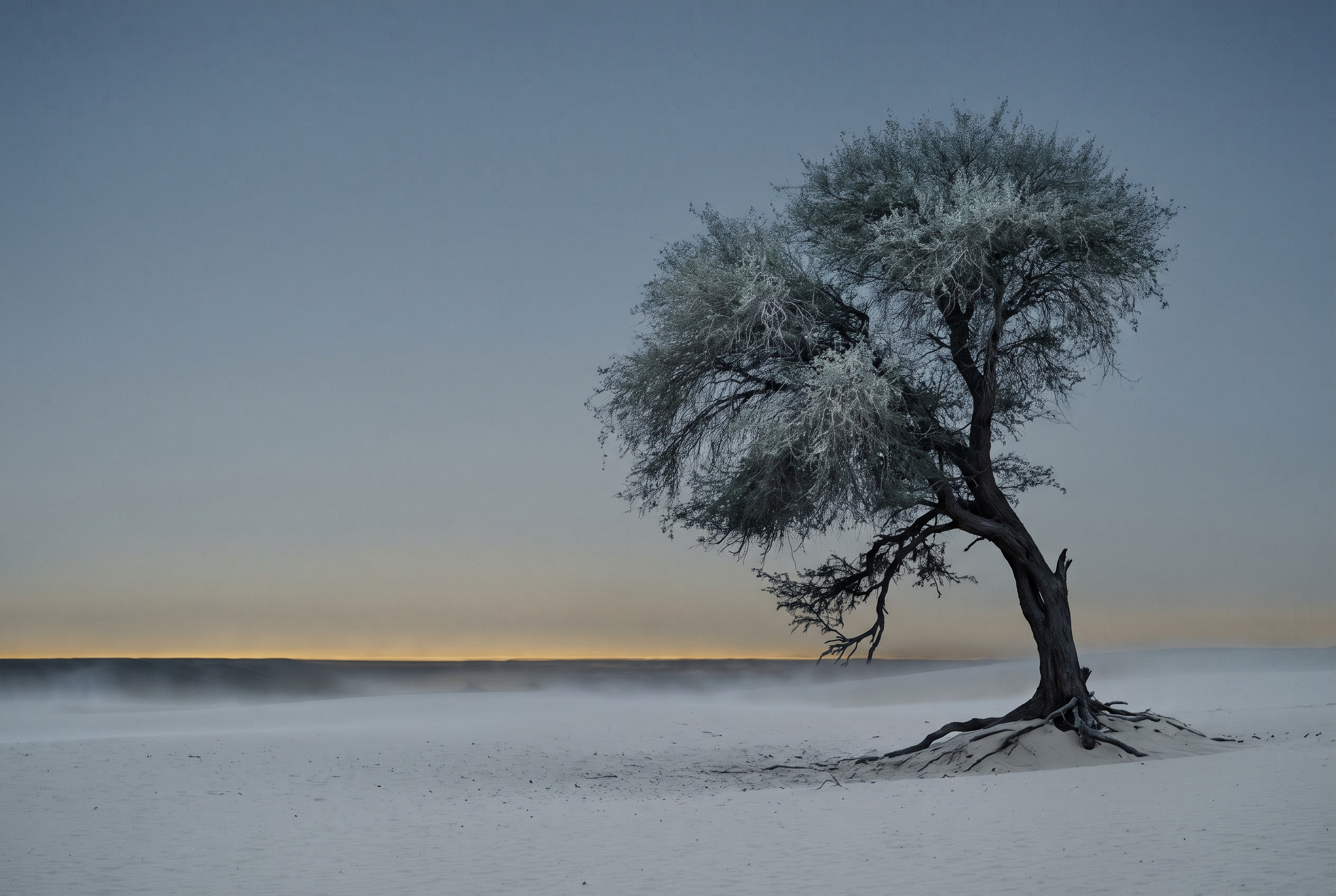
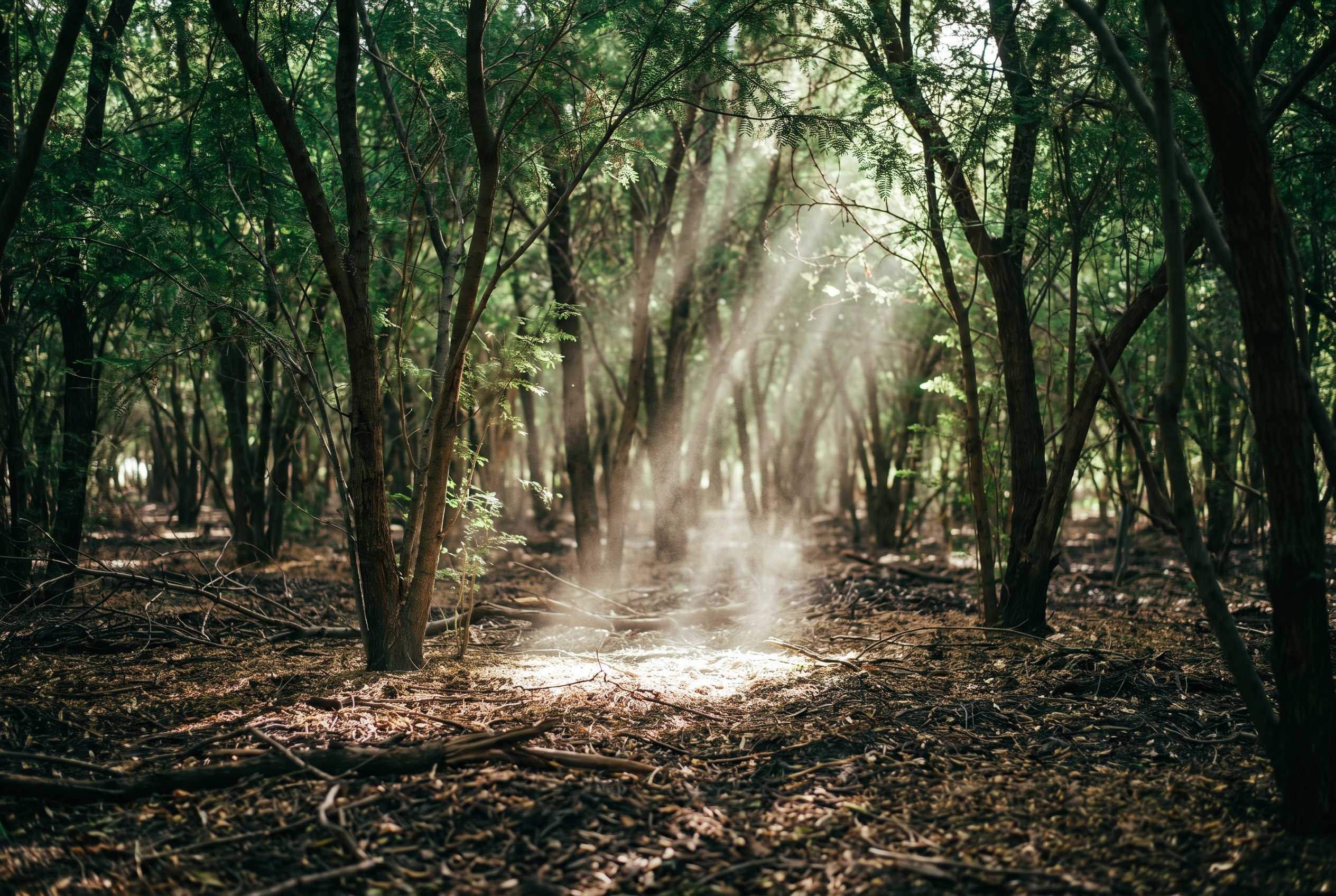
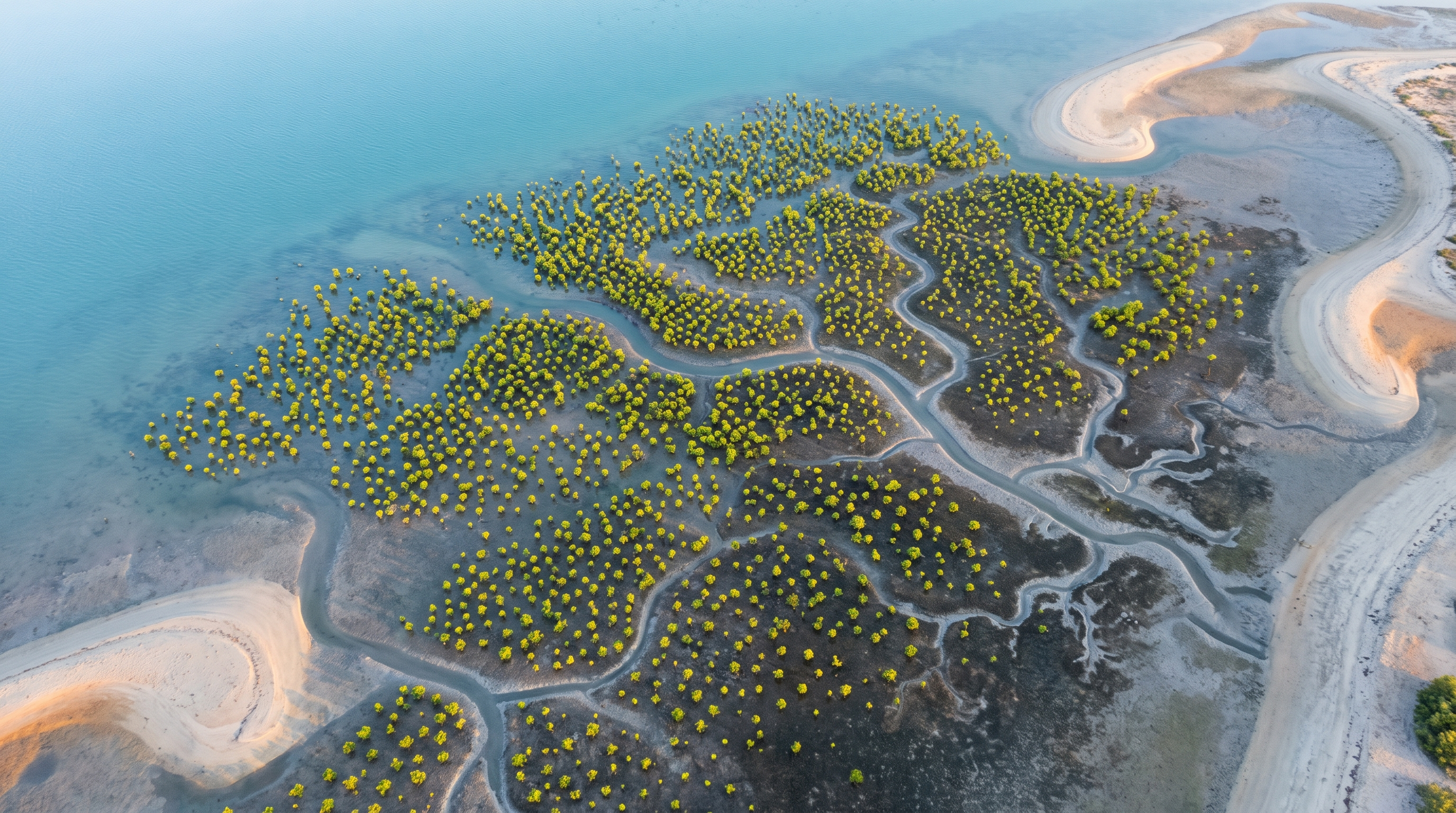
| Common name | Botanical | Layer | Mature height | Drought tolerance |
|---|---|---|---|---|
| Ghaf | Prosopis cineraria | Canopy | 8 to 15 m | Exceptional — deep taproot |
| Sidr | Ziziphus spina-christi | Canopy | 6 to 12 m | Very high |
| Samr | Vachellia tortilis | Canopy | 5 to 10 m | Very high |
| Arak | Salvadora persica | Sub-tree | 3 to 6 m | High — salt tolerant |
| Markh | Leptadenia pyrotechnica | Shrub | 2 to 4 m | Very high |
| Arta | Calligonum comosum | Shrub | 1 to 3 m | Very high — sand binder |
Hold any contractor to this list
- Species list
- Named, layered, and regionally native — not a tropical list
- Density
- Stated per square metre, with the mix ratio between layers
- Soil
- Investigation, amendment specification and salinity management
- Water source
- Named, secured, non-potable, with volume by year
- Weaning date
- The month irrigation stops, written into the contract
- Success metric
- Canopy closure and survival, not height in year one
Answered directly
What is the Miyawaki method?
It is a technique for establishing dense native forest quickly on small and degraded sites. The soil is prepared deeply and amended with organic matter, then native species from every forest layer — shrub, sub-tree, tree and canopy — are planted at high density, typically two to four plants per square metre, in a randomised mix. The site is mulched heavily, watered and weeded intensively for two to three years, and then left alone. Competition for light drives rapid vertical growth and canopy closure suppresses weeds, so the block becomes self-sustaining far sooner than conventional planting.
Can the Miyawaki method work in the UAE climate?
It can, provided two things are honest from the start. First, the species list must be genuinely regionally adapted — ghaf, sidr, samr, arak and their associates — rather than a tropical list transplanted from monsoon geography. Second, the water plan must be real: a dense block has a high establishment demand for the first two to three years and needs a secured supply, ideally treated sewage effluent or another non-potable source, with a defined date for weaning it off. Any proposal that skips either of those two points is selling a photograph, not a forest.
How long until a Miyawaki block looks like a forest?
Canopy closure at two to three years and a genuinely forest-like structure at five to seven is a reasonable expectation on a well-prepared site with a reliable water supply. Growth rates quoted from tropical monsoon sites should be discounted for arid conditions. The honest metric to hold a contractor to is not height in year one, it is canopy closure and the date at which supplementary irrigation is switched off.
Send us the plot and the water source.
Area, aspect, existing soil, and where the establishment water comes from. Those four things decide whether a site can carry a dense native block, and we would rather tell you no early than sell you a photograph.